“I am awake. Is it already morning, or did I wake up in the middle of the night? If it is too early, I may not be able to fall back to sleep. Then I’d be awake alone in the dark, and darkness is uncomfortable and threatening. If I open my eyes to check, I will certainly wake up… but I need to see the time. I need to know. Is it worth the risk?”
Maybe 20 seconds of my day has passed. Both sides of my mind, the real me and hypochondria, are already having their lively discussion.
Like a spaceship in a sci-fi series I automatically do a “systems check”. In what position did I wake up? How do I feel? What is my pulse? Do I feel hungry, or is the hollow feeling the result of a sudden attack of low blood sugar? If that is the case, how do I safely get down the stairs and to the kitchen to get something sweet?
The alarm rings and starts a new barrage of doubts.
How do I roll safely over to turn off the alarm? How far can I reach with my arm without possibly generating unpleasant bodily feelings? Which arm to use? Remember to hold your breath when you bend, says the hypochondria, otherwise your heart may again skip a beat, and you know what that can mean.
The daily struggle is on. It’s not a struggle against imaginary fears, as some might think. It’s not a struggle against voices in your head.
Hypochondria is a struggle for control - and for life and death.
It’s all about control
Hypochondria or hypochondriasis is (an outdated term and), in short, the conviction that one is sick even when all results prove otherwise. The Diagnostic and Statistical Manual of Mental Disorders used to define hypochondriasis as an individual diagnosis, but with the newest version of DSM-5 it was changed. The new diagnosis is split into two based on the existence or nonexistence of somatic symptoms (somatic simply means “relating to or affecting the body”). Hypochondria with somatic symptoms is very creatively called “somatic symptom disorder”. Without symptoms it’s, very surprisingly, “Illness anxiety disorder”.
DSM-5 attributes the following symptoms to somatic symptom disorder:
One or more somatic symptoms which are disrupting daily life. Some or all symptoms may be caused by other medical conditions.
Excessive attention given to the symptoms or associated health concerns, described at least one of the following
Disproportionate and persistent thoughts about the seriousness of one’s symptoms.
Persistently high level of anxiety about health or symptoms.
Excessive time and energy devoted to these symptoms or health concerns.
It is assumed in the DSM-5 that 5-7% of people suffer from this condition. If you think you’re alone and the only crazy person around, don’t worry. There’s a bunch of others like you and me out there.
In somatic symptom disorder the patient has one or more symptoms on which they focus. It could be for example headaches, which are fairly common to everyone, but trigger excessive worry in sufferers of somatic symptom disorder. Here’s the catch: it’s normal to worry about your health and about your symptoms. However, people with somatic symptom disorder these worries and fears are way out there.
Example
Imagine Larry and Lisa, a happily married couple. Larry has a headache, takes a painkiller and goes on with his work. It’s the third time this month, so Larry decides to contact his doctor. During the consultation Larry is assured that the headaches are caused by a stiff neck. Larry tries to focus on his posture and the symptoms improve.
Sounds normal, doesn’t it? Well, let’s have a look at Lisa, a somatic symptom disorder sufferer.
Lisa feels slight tension at the back of her neck. “Oh no!”, she thinks, “not another headache!” Her focus is gone. All she can think of is the tension, which slowly turns into a mean headache. Any plans she had are immediately cancelled. She can barely hold a conversation as all her thoughts are in the pain she’s feeling and what it might mean. A brain tumor? A blood clot? Meningitis? What must she do now? If she dies, what about Larry?
Taking a painkiller is not always an easy decision for Lisa. It could help, but it could also mask the symptoms of a more serious condition and prevent her from seeking the help she needs. A simple painkiller might mean that she misses an important symptom and dies. To her this risk is very, very real. Even if she takes a painkiller and the pain subsides, she’s not out of the woods. When will it come back? What will happen then?
Calling the doctor is another trick question. What if they do find something horribly wrong, and then all she fears really becomes true? Even if they don’t find anything, how can she trust the doctor? Maybe they missed something, maybe the laboratory made a mistake?
During the headaches Lisa is in full fight-or-flight mode. In between the headaches she’ll spend the time preparing for the next one, reading and worrying. It’s not unlikely that her worrying causes her to constantly tense her shoulders, and guess what? She’s in for even more frequent headaches!
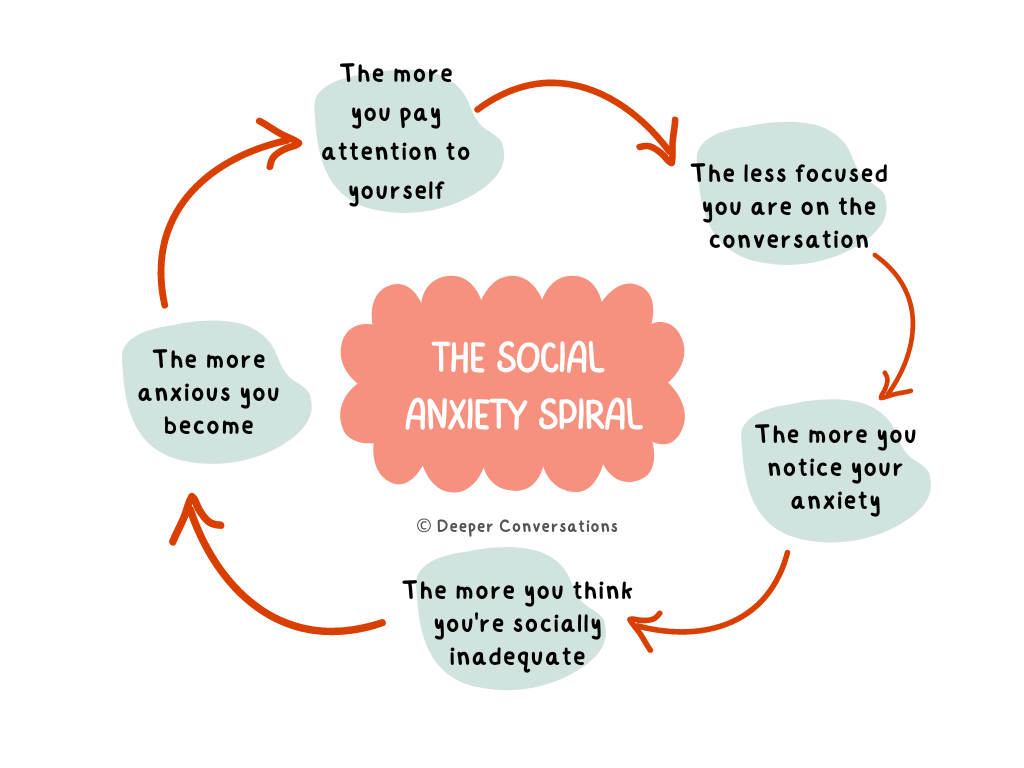
Queue dramatic music as the curtains open and the Hypochondriac Spiral rolls on the stage: Worry about existing symptoms makes the symptoms either feel worse and/or occur more often, increasing the worrying.
Definition
Alright, so this version of hypochondria sucks big time. What about the other where no physical symptoms are present?
When the somatic symptoms are mild or not present at all, the hypochondria is classified as “Illness anxiety disorder”. The DSM-5 describes this thus:
Extreme concern about contracting serious illness.
Somatic symptoms are not present or are mild.
High level of anxiety about health
Excessive health-related checks (temperature, pulse, balance) or avoidance of doctors altogether
Preoccupation with an illness has lasted at least 6 months
While the symptoms seem very similar to somatic symptom disorder, this list adds something which the other one lacked: constant checking. To an experienced hypochondriac this seems strange, since the checks are also a big part of the daily life of someone with somatic symptom disorder.
If our test person Lisa had an illness anxiety disorder, she would not need the headache to spiral into the realm of very unlikely and dramatic possibilities. She could do it any time. For a healthy person the obvious question this raises is “but if she hasn’t got any symptoms, why is she freaking out?” Well, check the symptoms of practically any disease. See that small print there? Yes, the part where it says “Sometimes there are no symptoms.”
If you now rolled your eyes, congratulations. You most likely don’t suffer from illness anxiety disorder. If you were nodding knowingly, welcome to the club of hypochondriacs.
Now we have seen the official side of it. The official diagnosis can be summarized about a health-related fear which is stronger than could be expected considering the true severity of the situation. In short: people are scared shitless (quite literally, since fear-induced stress can cause constipation).
For the sufferers, or patients if you will, hypochondria is not about fears at all. It’s not irrational, out of proportion or even related to mental health. It’s a question of life and death. It starts with the question “what is this”, when something triggers the avalanche of fearful thoughts. When that something is identified, the question turns to “what does it mean?”. Answers are found, and for a moment the mind is at rest. Soon, though, another question creeps in: “What if?” In the end, it all ends with the question “Is this worth the risk?”.
This is perhaps easiest to understand by a few more examples.
Event: A red lump appears on the skin.
Thought: What is this?
Event: The lump is identified as an in-grown hair. It looks like one, it feels like one, so it probably is one. It looks like all the other gross pictures of in-grown hairs on Google.
Thought: What does it mean?
Event: If it is an in-grown hair, nothing needs to be done. It will solve itself. Perhaps take it easy with the epilator next time… If it does get infected or change, though, perhaps it’s better to have it checked out.
Thought: What if it does change? What if it’s not an in-grown hair but follicular cancer? (here’s where it usually starts to get interesting for hypochondriacs.)
Event: Okay, hold your horses. It’s NOT, okay? Just go on with your daily tasks and let it be.
Thought: Is it worth the risk to let it be? Can I just ignore it and not have it removed and sent to the pathology right now?
Event: A new viral sickness starts to spread in a far away country.
Thought: What is this?
Event: The disease is identified as a novel virus, which can cause severe respiratory problems. It does not seem to be very infectious.
Thought: What does it mean?
Event: If it stays in that country, nothing needs to be done. It might spread or mutate, though. Then the situation must be evaluated again.
Thought: What if it does change? If it can be asymptomatic, maybe I have it already! It’s new so what do the scientists know, when you get down to it?
Event: Information about how to avoid the virus starts to spread while the virus itself spreads as well.
Thought: Is it worth the risk to wait for the official instructions? Perhaps I need to isolate myself already, and start to prepare for a long stay indoors. They say I can go outside and have a walk, but is it worth the risk?
You might start to see a pattern here. Once there are more alternatives and less things the person him/herself can do, the more fear. You’re right: it’s about control. Hypochondria is in a way similar to the strategy that keeps casual Poker-players from gambling their life savings or investors from buying whatever as soon as it’s a bit cheaper: I must be in control.
To a patient, hypochondria is extremely logical and extremely realistic. It’s structured, carefully built, nurtured and maintained. It’s what keeps the patient alive.
Hypochondria is not the ragged man on the street shouting “The end is nigh!”. It’s a lawyer, carefully building a case to win the court.
Hypochondria is not the elderly person offering everyone flower-oil drops to save them from cancer. It’s a PhD student writing a thesis which can withstand the fiercest opposition.
Hypochondria is not the pregnant woman afraid of Zika-mosquitoes, asking her husband to buy some mosquito repellent for the summer. It’s her friend, a mother who does everything for her family, who reads a lot and cares for everyone who has the slightest ailment.
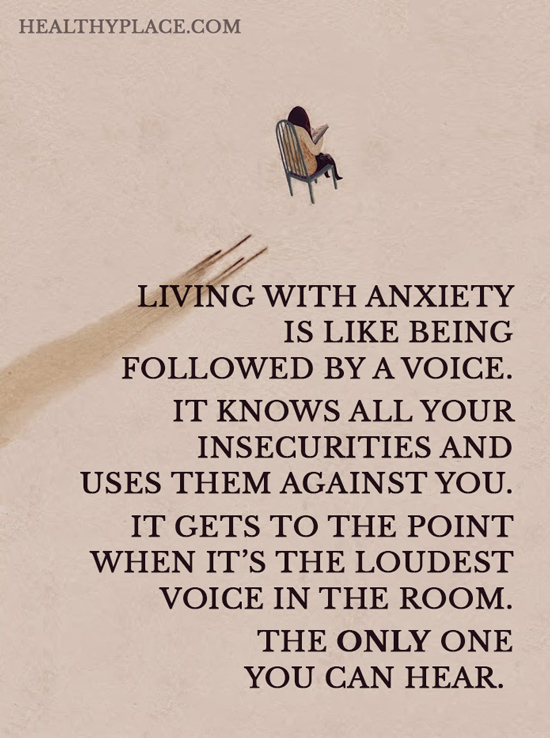
It’s the voice in your head whispering “What if?” and poking the water glass of self-control very close to the table edge of sanity.
It’s about control of your life. It’s about surviving.